Badami Aihole Pattadakal Circuit: Chalukya Temples & Routes
Complete guide to the Badami, Aihole, and Pattadakal circuit in Karnataka: rock-cut cave temples, Agastya Lake, UNESCO coronation monuments, and route map.
Located along the Malaprabha River valley in the Bagalkot district of northern Karnataka, the historical triangle of Badami, Aihole, and Pattadakal represents the foundational crucible of Hindu and Jain temple architecture. Between the sixth and eighth centuries CE, the Early Chalukya dynasty transformed this arid sandstone canyon into a prolific architectural laboratory.
Badami Circuit Travel Essentials
- Geographic District: Bagalkot District, Northern Karnataka.
- Circuit Hubs: Badami (Caves & Lake), Pattadakal (UNESCO Complex), Aihole (Cradle of Architecture).
- Total Circuit Distance: 140 kilometers for a complete two-day road loop.
- Key Highlights: Cave 1 Nataraja, Bhutanatha Lake Temple, Virupaksha Temple, Durga Apsidal Temple.
- Nearest Railway Junction: Badami Railway Station (BDM, 5 km from town center).
- Best Travel Window: October to March for comfortable dry winter temperatures.
Master sculptors and royal guilds experimented with rock-cut chambers, free-standing structural masonry, and contrasting North Indian Nagara and South Indian Dravidian styles. Travelers exploring southern India’s foundational heritage frequently rank this Chalukyan loop alongside the top places to visit in India.
Official historical gazetteers cataloged on the Bagalkot District official tourism portal record over 150 monument sites across the valley. These monuments document how Indian temple building transitioned from rough excavated rock caves into monumental freestanding stone sanctums.
| Heritage Hub | Distance from Badami | Historical Significance | Architectural Format |
|---|---|---|---|
| Badami (Vatapi) | Circuit Starting Point | Imperial Chalukya Capital (540–757 CE) | Four monolithic rock-cut cave temples & lake shrines |
| Pattadakal | 22 km northeast | Royal Coronation City (Pattada-Kisuvolal) | UNESCO World Heritage complex of 10 major temples |
| Aihole (Ayyavole) | 35 km northeast | Merchant Guild Capital & “Cradle of Architecture” | Over 125 structural stone temples across rural fields |
Badami Cave Temples: Monolithic Rock Shrines Over Agastya Lake
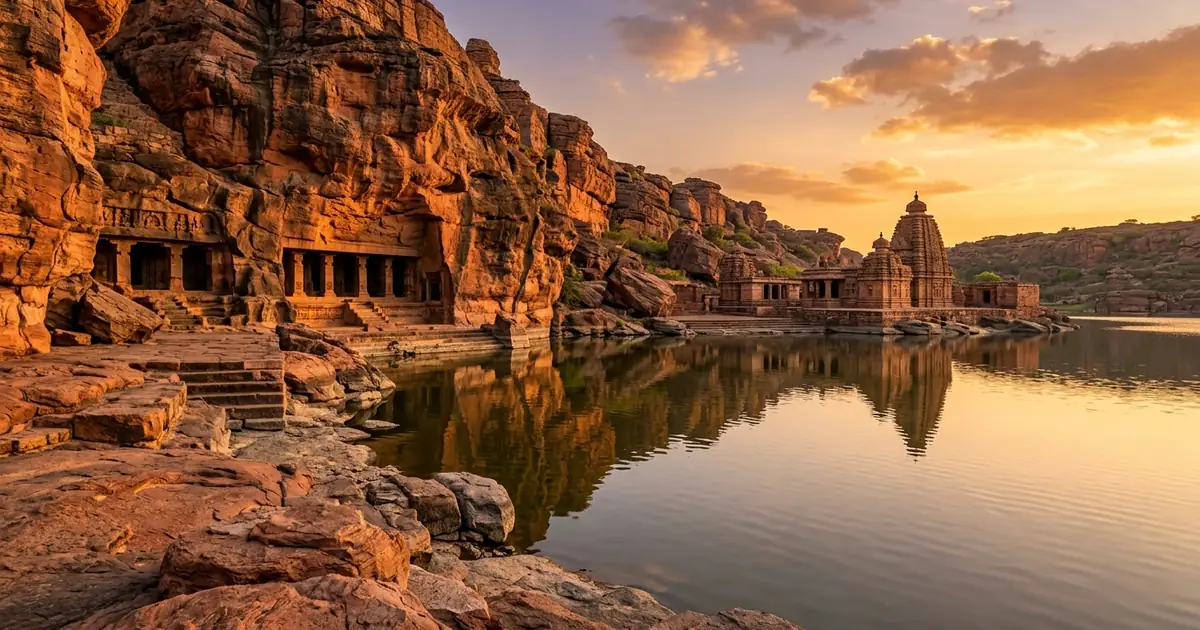
Badami, historically known as Vatapi, was established as the rugged imperial capital of the Chalukyas by King Pulakeshin I in 540 CE. The town is situated within an amphitheater of rust-red sandstone cliffs surrounding the green waters of the ancient Agastya Lake.
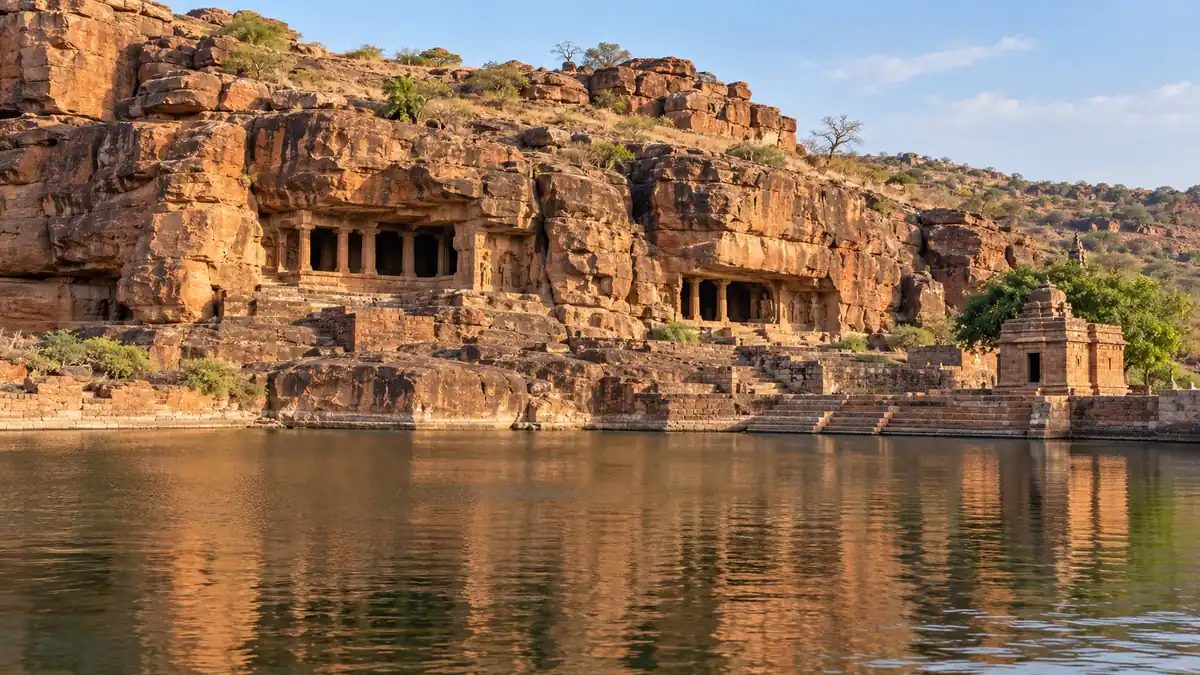
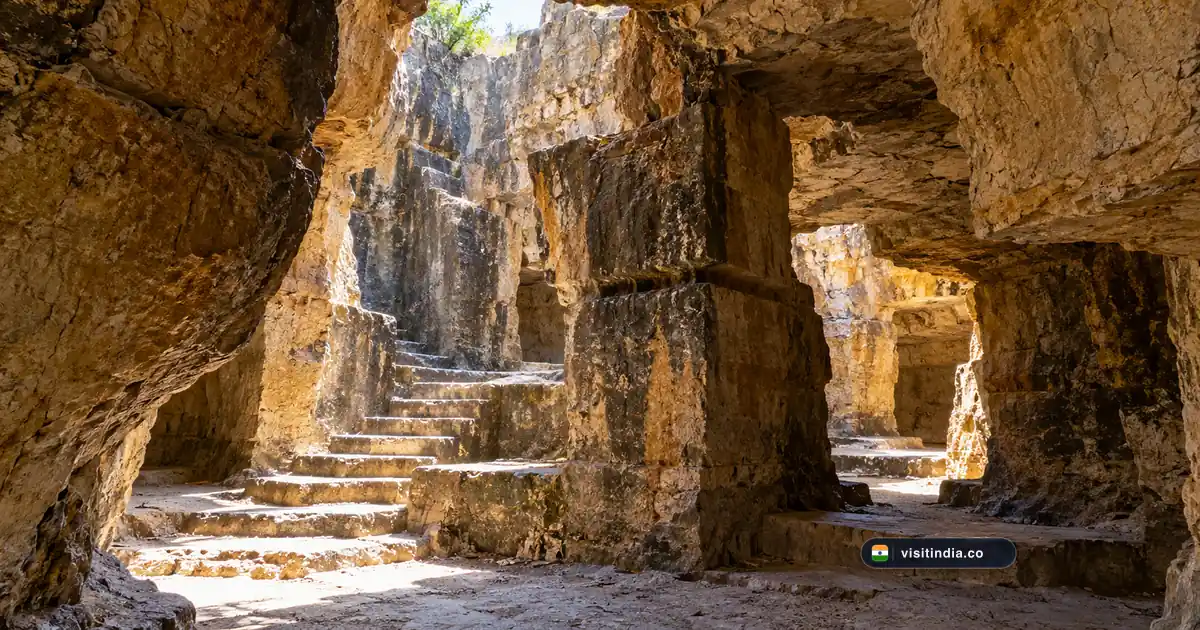
The Badami cave complex comprises four monumental rock-cut shrines carved into the sheer southern cliff face, connected by stepped stone terrace pathways. Each cave features a pillared verandah (mukhamandapa), a columned main hall (mahamandapa), and an inner sanctum excavated into solid sandstone bedrock.
Cave 1: The 18-Armed Dancing Shiva Nataraja
Carved around 550 CE, Cave 1 is dedicated to Lord Shiva and represents the earliest excavation in the cliff. Before ascending the front porch, visitors encounter a celebrated 1.5-meter-high relief sculpture of an 18-armed Shiva Nataraja:
- Eighty-One Cosmic Postures: Shiva holds musical instruments and symbolic weapons in his eighteen hands. By pairing any of his nine left hands with any of his nine right hands, the sculpture depicts eighty-one distinct classical dance postures (karanas) codified in the ancient Natya Shastra.
- Flanking Deities: Ganesha and the skeletal sage Bhringi dance in joyful attendance beside Shiva’s feet, while Nandi the bull watches with devotional stillness.
- Ceiling Naga: The verandah ceiling features an intricate carved serpent king (Nagaraja) surrounded by spiraling coils and flying celestial couples.
Cave 2: Lord Vishnu as the Cosmic Boar Varaha
Dedicated to Lord Vishnu, Cave 2 sits slightly higher along the stone cliff trail. The verandah is flanked by two monumental guardian door-keepers (dvarapalas) holding lotus blooms and maces:
- Varaha Avatar: The eastern wall features a colossal relief of Vishnu in his third incarnation as Varaha the wild boar, lifting Bhudevi (Mother Earth) gently from the cosmic ocean upon his curved tusk.
- Trivikrama Panel: The companion western wall depicts Vishnu as Trivikrama, the cosmic giant taking three strides across the earth, sky, and underworld, with his left leg raised horizontally to the heavens.
Cave 3: The Grandest Vaishnavite Cave and Chalukya Inscriptions
Cave 3 is the largest, most elaborately carved, and artistically sophisticated excavation at Badami. A formal stone inscription carved into a front pillar dates the temple precisely to the full moon day of November 578 CE, consecrated by King Mangalesha during the reign of his elder brother Kirtivarman I:
- Anantasayana Vishnu: A magnificent relief shows Lord Vishnu reclining in meditative sleep upon the coiled body of the multi-headed serpent king Shesha.
- Standing Narasimha: The half-man, half-lion avatar stands majestically with folded arms, displaying a crown of royal authority.
- Original Fresco Murals: Traces of ancient mineral pigment murals survive on the verandah ceiling, representing some of the earliest documented Hindu fresco paintings in India.
Cave 4: The 6th-Century Jain Sanctuary of Mahavira
Cave 4 sits at the highest point of the cliff, excavated toward the close of the sixth century as a Jain monastery. The interior is distinguished by quiet dignity and detailed filigree stone carvings:
- Tirthankara Mahavira: The inner sanctum enshrines a seated image of Lord Mahavira resting upon a lion throne (simhasana).
- Bahubali in Meditation: A prominent wall relief depicts Gommateshwara (Bahubali) standing in deep meditative penance, with forest vines climbing up his legs and legs entwined with ant hills.
- Parshvanatha Relief: Flanking the verandah, the twenty-third Tirthankara stands sheltered beneath the protective five-headed hood of a cobra king.
Bhutanatha Temples, Northern Fort & Agastya Tirtha Waters
The natural centerpiece of Badami is the sacred Agastya Lake (Agastya Tirtha), a large man-made water reservoir constructed in the fifth century. Its mineral-rich waters are believed by local residents to possess healing properties.
The Bhutanatha Temple Cluster on Sandstone Lake Embankments
At the eastern water edge of Agastya Lake sits the Bhutanatha group of temples, constructed from soft golden-brown sandstone. Dating between the seventh and eleventh centuries, the main sanctuary features an open pillared hall extending directly into the lake water:
- Water Reflections: During the monsoon and winter months, when the reservoir fills completely, the lower stone steps submerge, making the temple appear to float upon the lake surface.
- Sandstone Boulder Boulders: Behind the main shrine, huge sandstone boulders are carved with miniature reliefs of the avatars of Vishnu and multi-armed manifestations of Shiva.
The Northern Fort, Upper Shivalaya & Cannon Viewpoints
Opposite the cave temples, the rugged northern sandstone hill was fortified during Chalukya times and later upgraded by Tipu Sultan in the eighteenth century. A winding stone path leads up the cliff face past ancient stone granaries and guard posts:
- Upper Shivalaya: Perched high on the summit ridge, this seventh-century shrine preserves a Dravidian stone tower and detailed outer friezes depicting episodes from the Ramayana.
- Malegitti Shivalaya: Located on a separate spur below, this shrine is recognized as one of the best-preserved early structural stone temples in South India, celebrated for its sturdy square sanctum and stone lattice windows.
- Sunset Panoramas: The northern ramparts provide an extraordinary viewpoint over the green lake, the town roofs, and the cave-carved cliffs across the valley.
Pattadakal: The UNESCO World Heritage Royal Coronation Complex
Situated twenty-two kilometers northeast of Badami on the left bank of the Malaprabha River, Pattadakal served as the ceremonial coronation capital (Pattada-Kisuvolal) of the Chalukya monarchs. Inscribed as a UNESCO World Heritage site in 1987, the compact, manicured complex contains ten major temples constructed side by side.
To compare this early royal stone experimentation with later imperial monuments in Tamil Nadu, read our companion Brihadisvara Temple Thanjavur guide.
The Confluence of Dravidian and Nagara Styles
Pattadakal holds a unique place in world art history because it served as an open architectural laboratory where two distinct regional styles matured simultaneously within feet of each other:
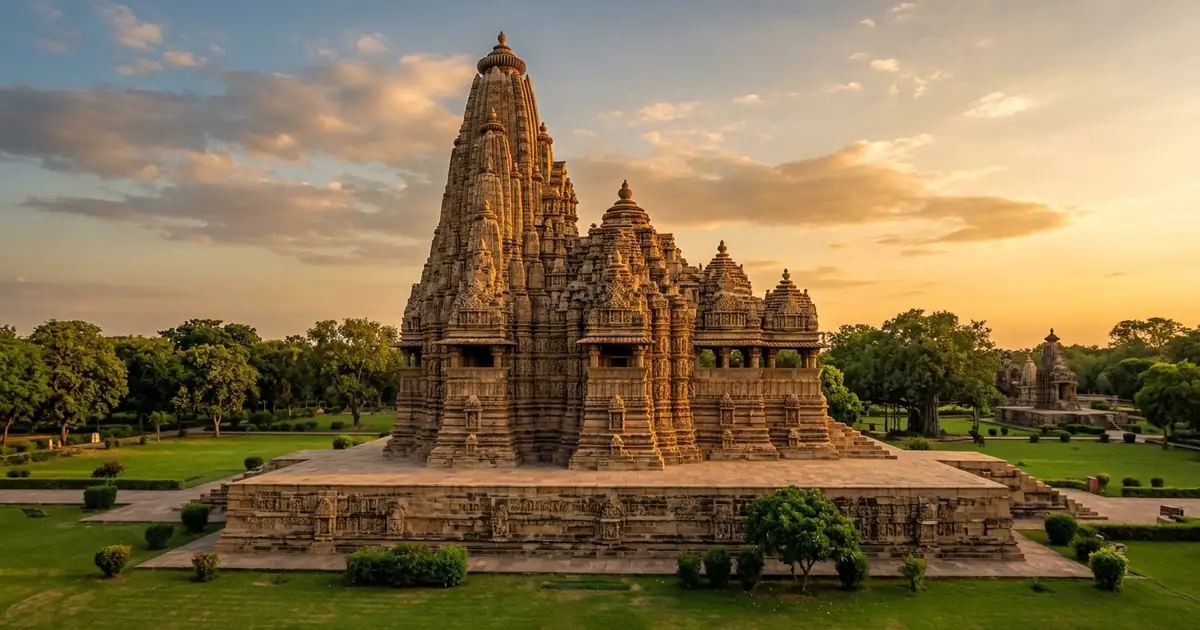
- Dravidian (Southern Style): Temples like Virupaksha, Mallikarjuna, and Sangameshwara feature stepped pyramidal towers, multi-tiered barrel-vaulted pavilions, and open pillared mandapas.
- Nagara (Northern Style): Temples like Galaganatha, Kadasiddheshwara, and Jambulinga feature curved, beehive-shaped spires (rekha-devalas) topped by ribbed stone discs (amalakas), reflecting architectural styles common to Odisha and central India.
Virupaksha Temple: Queen Lokamahadevi’s Victory Monument
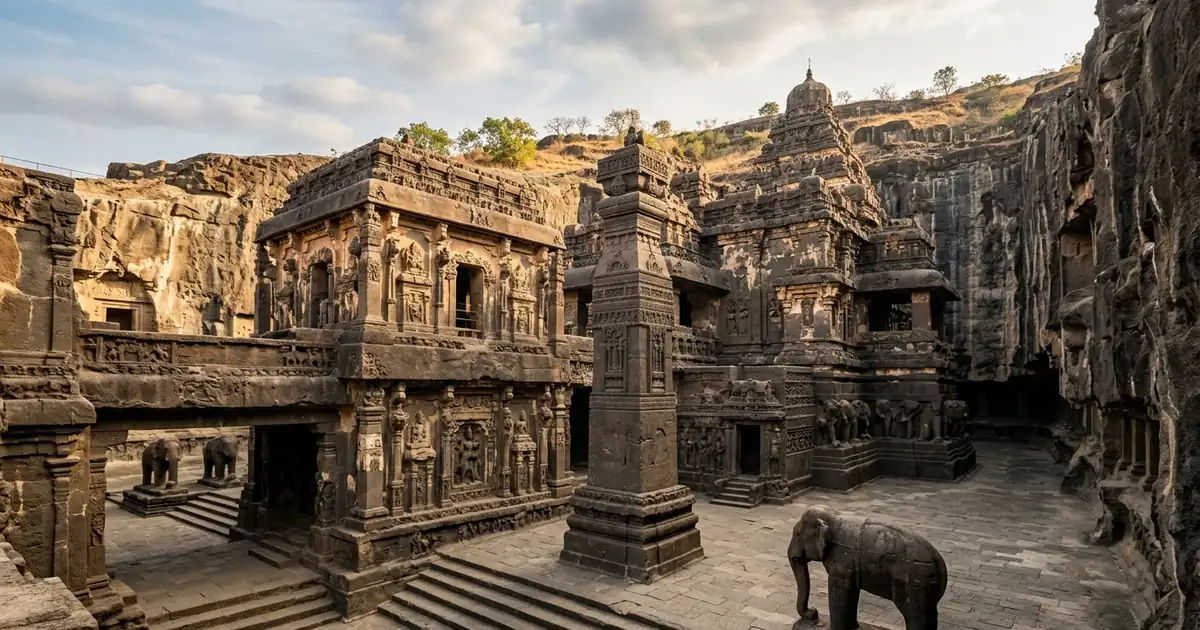
The Virupaksha Temple is the undisputed masterpiece of Pattadakal. Commissioned around 740 CE by Queen Lokamahadevi to commemorate King Vikramaditya II’s military triumph over the Pallavas of Kanchipuram, it served as the direct architectural inspiration for the monolithic Kailash Temple at Ellora:
- Master Architect Inscriptions: Stone inscriptions on the southern facade record the names of the master builders: Gunda Anivaritachari and Sarvasiddhi Achari, honoring them with royal titles and gold wrist ornaments.
- Carved Pillar Narratives: The sixteen monolithic pillars of the main hall feature detailed narrative relief panels illustrating episodes from the Mahabharata, Ramayana, and Panchatantra fables.
- Nandi Pavilion: An imposing square pavilion houses a massive black basalt statue of Nandi, still adorned with floral garlands during festival days.
Mallikarjuna, Sangameshwara & Galaganatha Shrines
Directly adjacent to Virupaksha stands the Mallikarjuna Temple, built simultaneously by Queen Trailokyamahadevi (the younger sister of Lokamahadevi). It mirrors the plan of Virupaksha with a slightly more rounded four-tiered stone tower:
- Sangameshwara Temple: Begun by King Vijayaditya around 720 CE, this is the oldest structural temple at Pattadakal, displaying pure classical Dravidian lines and heavy, unadorned stone walls.
- Galaganatha Temple: A striking northern Nagara shrine featuring a curved central shikhara and a dramatic relief of Shiva slaying the demon Andhaka on its outer niche.
Aihole: The Cradle of Indian Temple Architecture
Located thirteen kilometers further down the Malaprabha River from Pattadakal, Aihole (historically known as Ayyavole) was the commercial headquarters of the legendary 500-member Ainnurruvar Chalukya merchant trade guild.
Spread across modern agricultural fields, village alleys, and riverbanks are more than 125 structural stone temples dating from the fifth to twelfth centuries CE. Because early architects had no established blueprints to follow, they tested every conceivable roof shape, porch layout, and column design here.
National archaeological documentation preserved in the Archaeological Survey of India database confirms that Aihole contains the highest concentration of architectural prototypes anywhere on the Indian subcontinent.
Durga Temple: The Unique Apsidal Sanctum and Pillared Verandah
The celebrated Durga Temple is the visual signature of Aihole. Built in the late seventh century, the temple does not honor Goddess Durga; its name derives from its historic location near the fortified defense wall (durg) of the town:
- Apsidal Plan: The rear of the sanctum is curved in a horseshoe shape (gajaprashta or elephant-back), adapted from early Buddhist chaitya prayer halls into a Brahmanical Hindu temple.
- Peristyle Verandah: An open colonnaded walkway wraps entirely around the exterior, allowing natural air and light to circulate through the stone halls.
- Master Sculptural Panels: The outer corridor niches house dynamic stone sculptures of Goddess Durga Mahishasuramardini, Shiva with Nandi, and Vishnu’s Varaha avatar, carved with exceptional anatomical precision.
Lad Khan Temple: Medieval Assembly Hall Experimentation
The Lad Khan Temple, dating to roughly 500 CE, is one of the earliest structural stone temples in Karnataka. Its layout resembles a community meeting pavilion or village assembly hall rather than a traditional temple:
- Sloping Stone Roof: The flat stone roof features two stepped tiers of massive stone slabs joined with interlocking stone ridges to keep rain water out.
- Stone Latticework: The walls are pierced with decorative stone screens (jalis) carved in geometric checkerboard and floral patterns, illuminating the dark central hall where a shrine to Shiva was later installed.
Meguti Jain Temple and the Famous Ravikirti Inscription
Perched atop the highest hillock in Aihole, the Meguti Jain Temple was consecrated in 634 CE by the court poet Ravikirti during the reign of Emperor Pulakeshin II.
Carved into the eastern exterior stone wall is the world-famous Aihole Inscription. Written in classical Sanskrit verse using Old Kannada script, the inscription provides the definitive historical record of Pulakeshin II defeating Emperor Harsha of Kannauj on the banks of the Narmada River, preserving the territorial boundary between North and South India.
Circuit Travel Logistics: Road Route, Hubli Transit & Entry Fees
Exploring the Badami, Pattadakal, and Aihole circuit is straightforward with basic planning. Because these ancient towns are situated within 35 kilometers of one another, travelers can easily base themselves in Badami and take day trips across the circuit.
Travelers coordinating extended historical circuits can connect this route southward into the Vijayanagara imperial capital detailed in our places to visit in Hampi guide.
| Logistical Parameter | Practical Detail | Actionable Advice |
|---|---|---|
| Combined Circuit Base | Badami town (Bagalkot District) | Stay in Badami; travel outward to Pattadakal (22 km) and Aihole (35 km) |
| ASI Monument Tickets | ₹25 Indians; ₹300 Foreigners per complex | Digital entry tickets for Badami Caves and Pattadakal complex |
| Local Circuit Transport | Hired private cab or rental auto-rickshaw | ₹2,200 to ₹2,800 for full-day private AC cab covering all three towns |
| Nearest Airport | Hubli Airport (HBX, 105 km southwest) | Daily commercial domestic flights from Bengaluru, Mumbai, and Delhi |
| Nearest Railhead | Badami Railway Station (BDM) | Daily express trains from Hubli, Bengaluru, and Hyderabad |
The Classic 140-Kilometer Driving Loop (Badami - Pattadakal - Aihole)
The recommended travel route forms an efficient road triangle:
- Leg 1: Badami to Pattadakal (22 km): A smooth 30-minute drive eastward through sunflower fields and rural countryside along State Highway SH14.
- Leg 2: Pattadakal to Aihole (13 km): A quick 20-minute drive following the winding Malaprabha River valley directly to the Durga Temple complex.
- Leg 3: Aihole to Badami (35 km): The return loop proceeds via Guledagudda, bringing you back to Badami in approximately 45 to 50 minutes.
Reaching from Hubli (HBX), Belgaum (IXG) and Hampi (HPT)
Travelers have several transit entry points into the Malaprabha circuit:
- From Hubli (Hubballi): Hubli Airport (HBX) sits 105 kilometers southwest, requiring a 2.5-hour highway drive via Gadag. Regular express trains also connect Hubli Junction to Badami in two hours.
- From Belgaum (Belagavi): Sambra Airport (IXG) is 140 kilometers northwest, accessible in roughly three hours via Bagalkot highway corridors.
- From Hampi / Hospet: Hampi sits roughly 140 kilometers southeast of Badami. Hired private cabs cover the distance in 3 to 3.5 hours via Kushtagi and Ilkal, making a combined Hampi-Badami itinerary extremely popular.
ASI Ticket Booking, Photography Rules & Best Travel Season
Practical monument visiting guidelines enforced by the Archaeological Survey of India include:
- Digital QR Entry Tickets: Separate entry tickets are required for the enclosed Badami Cave Temples complex and the main Pattadakal temple compound. Digital tickets purchased online or through QR gate scanners save wait times. Most individual temples in Aihole are free to enter.
- Photography Rules: Personal handheld photography is permitted without fee across all sites. Tripods and commercial video rigs require advance written clearance from the ASI circle office.
- Weather Guidelines: The region experiences hot semi-arid weather. The winter period from October through February offers pleasant daytime conditions (22°C to 30°C). Avoid visiting during April and May, when midday temperatures regularly exceed 41°C.
State-wide heritage circuits and visitor safety standards are coordinated on the Ministry of Tourism Incredible India portal.
Curated 2-Day Badami, Pattadakal & Aihole Itinerary
This 2-day loop ensures you visit monuments during the best photography lighting and provides adequate time to appreciate ancient stone reliefs.
Day 1: Badami Caves, Agastya Lake & Bhutanatha Sunset
- 07:00 AM: Arrive at Badami town, check in at your hotel, and enjoy a traditional south Indian breakfast of hot idlis and filter coffee.
- 08:30 AM: Enter the Badami Cave Temples complex early before tour bus crowds arrive.
- 09:00 AM: Marvel at the 18-armed Shiva Nataraja in Cave 1 and the Trivikrama panel in Cave 2.
- 10:30 AM: Spend an hour examining the 578 CE inscriptions, Narasimha relief, and carved pillars of Cave 3.
- 11:45 AM: Climb up to Cave 4 to view the meditative stone carvings of Mahavira and Bahubali.
- 01:00 PM: Savor authentic North Karnataka Jolada Rotti meals served with stuffed brinjal and peanut chutney at a local eatery.
- 03:30 PM: Walk around the stone embankment of Agastya Lake to visit the Archaeological Museum.
- 05:00 PM: Photograph the golden sandstone Bhutanatha Temple cluster as sunset colors reflect across the lake waters.
Day 2: Pattadakal UNESCO Complex & The Aihole Temple Trail
- 08:00 AM: Depart Badami along the highway for the 22-kilometer drive to Pattadakal.
- 08:30 AM: Enter the UNESCO World Heritage complex. Spend two hours inspecting the confluence of Dravidian and Nagara towers.
- 09:30 AM: Study the narrative Mahabharata pillar carvings and monolithic Nandi inside Virupaksha Temple.
- 11:00 AM: Drive thirteen kilometers further northeast to reach Aihole.
- 11:30 AM: Tour the unique apsidal horseshoe layout and master sculptures of the Durga Temple.
- 01:00 PM: Explore the flat-roofed stone assembly halls of Lad Khan and the Gaudar Gudi shrines.
- 02:00 PM: Enjoy a relaxed lunch at the KSTDC Mayura restaurant in Aihole.
- 03:30 PM: Hike up the rocky hillock to visit the Meguti Jain Temple and inspect the historic 634 CE Ravikirti inscription.
- 05:30 PM: Drive back to Badami or proceed southward toward Hubli for your onward train or flight connection.
Frequently Asked Questions About the Badami Circuit
How many days are needed to cover Badami, Aihole, and Pattadakal?
A minimum of two full days is recommended to explore the circuit comfortably. Devote Day 1 to the Badami Cave Temples, Agastya Lake, and the Bhutanatha group, and Day 2 to the UNESCO temples of Pattadakal and the archaeological ruins of Aihole.
Which town is the best base for exploring the circuit?
Badami town serves as the most convenient base for travelers. It offers the widest selection of accommodations (including KSTDC Mayura Chalukya and heritage resorts), numerous local eateries, and direct railway connections, located only 22 kilometers from Pattadakal and 35 kilometers from Aihole.
Is the Badami circuit suitable for senior citizens?
Visiting Pattadakal and Aihole involves flat, easy walking across level stone courtyards and lawn pathways, making them very accessible for older travelers. However, exploring the Badami Cave Temples requires climbing approximately 150 to 200 stone steps cut into the cliff face. Travelers with knee issues should take frequent rest stops along the shaded terrace platforms.
Can Hampi and Badami be combined in a single trip?
Yes, combining Hampi and Badami is the classic northern Karnataka heritage route. Hampi lies approximately 140 kilometers southeast of Badami, taking three to three and a half hours by car. A comprehensive four-day itinerary typically allocates two days for Hampi and two days for the Badami-Pattadakal-Aihole triangle.
What should travelers wear and pack for the Badami circuit?
Pack comfortable cotton clothing, supportive walking shoes, a sun hat, sunglasses, and high-SPF sunscreen, as much of the walking takes place across exposed sandstone terraces. Carry a refillable water bottle and adequate Indian currency notes, as card payment terminals in rural village shops often experience network outages.